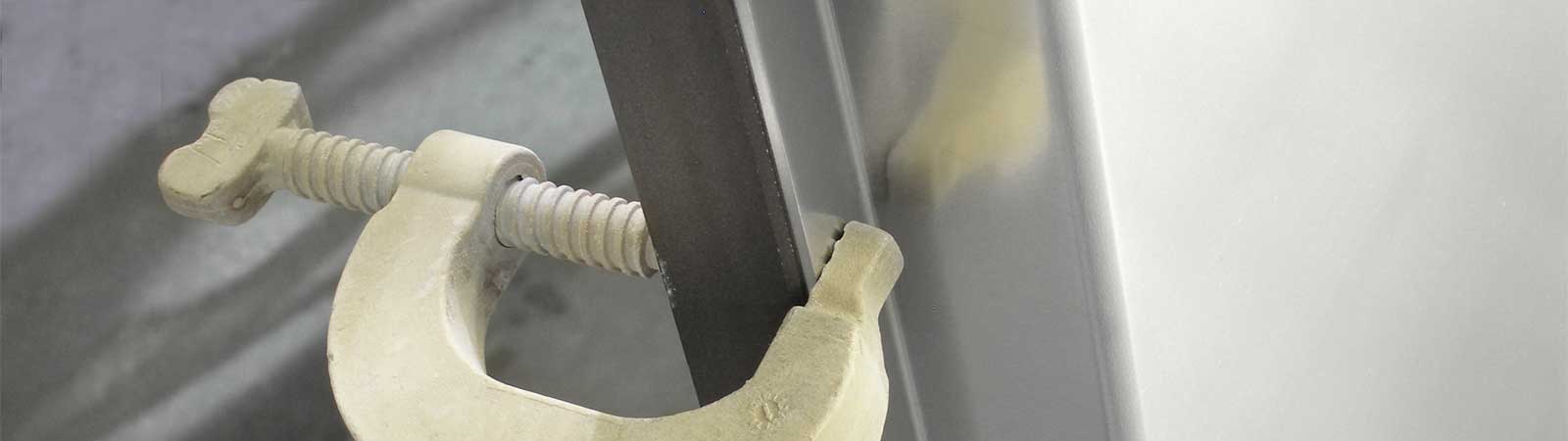


Guidance on the suspension of aluminium components during surface finishing
The following description sets out various points regarding mounting and labelling of visible sides. This may enable the customer to clarify any outstanding questions in advance and reduce the need for us to make further enquiries. If information is missing, this may result in longer delivery times and additional costs incurred in clarifying the matter.
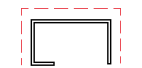
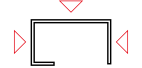
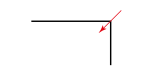
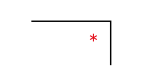
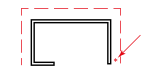
Marking of visible surfaces
Dotted lines
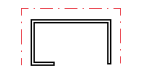
dashed line
Triangle
Marking contact points with a star or an arrow and a star
Condition of the material to be coated
Corrosion, moulding defects, adhesive residues and other substances cause adhesion problems and surface defects. It is essential that the material is in perfect condition. In the event of corrosion, no warranty can be given for the coating. We can remove adhesive residues or other substances, but please be aware of the additional costs this will incur.
If the components have threads, these will be anodised or must be protected separately from the pickling solution. Parts that have already been assembled into a sub-assembly can only be anodised following consultation.
SHEETS
Standard suspension
Minimum requirements:
- Minimum requirements:
- The visible sides must always be specified
- Contact points must always be visible
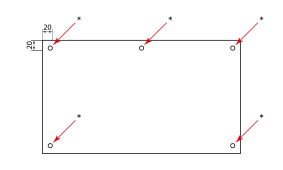
- Sheets are secured for powder coating using holes (see table) or, in the case of single-sided coating, with welded bolts
- No holes are required for anodising; in this case, the sheets are clamped securely (see table) – a margin of 20 mm is required from the edge for holes and 30 mm for bolts
Marking of visible surfaces
Thickness |
Length |
Width |
Number of holes/clamping points |
|
| in mm | in mm | in mm | Long Side | Short Side |
| 1,5 bis 4 | 2000 | 1000 | 1 | 2 |
| 2500 | 1250 | 3 | 2 | |
| 3000 | 1500 | 3 | 2 | |
| 4000 | 1500 | 4 | 2 | |
| 6000 | 1500 | 5 | 2 | |
Profile
Standard-suspension
Minimum requirements:
- The visible sides must always be specified
- Contact points are always visible
- If the visible side is not specified, we assume the outer surfaces, as is the case with angle sections, for example.
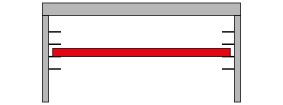
- On both sides, there are visible bearing surfaces up to 50 mm from the edge (Sketch 1).
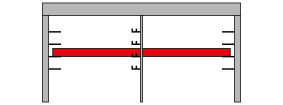
- For lengths of 2000 mm or more, an additional support beam is fitted centrally (see Sketch 2)
- Hollow profiles allow for suspension from the inside.
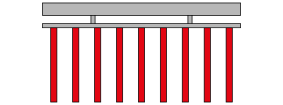
- Profiles up to 2000 mm in length can be drilled on one side for suspension. Visible on all sides possible (Sketch 3)
- Material with closed cavities cannot be treated. There must be at least two holes for water to enter and drain out. This prevents the material from floating in the baths and prevents deformation of the hollow body.
Standard view pages for semi-finished products

Sketch 1
Sketch 2
Sketch 3
Powder coating
Standard mounting bracket for small parts
Minimum requirements:
- The visible sides must always be specified
- Contact points are always visible
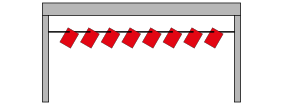
- Each component requires at least one hole with a minimum diameter of 4 mm so that the component can be threaded onto a wire (Sketch 4)
- Ideally, the geometry and arrangement of the holes in the components should allow for continuous suspension (Sketch 5).
- If the components have threads, these are either coated as well or must be protected separately.
- Mounting using screws in the internal threads is possible, but requires additional work (Sketch 6)
- Individual components that have already been assembled into a single unit are joined inseparably by the powder coating.
Sketch 4
Sketch 5
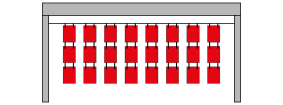
Sketch 6
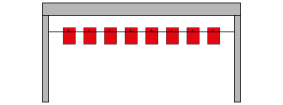
Anodising
Standard mounting bracket for small parts
Minimum requirements:
- Minimum requirements:
- The visible sides must always be specified
- Contact points must always be visible
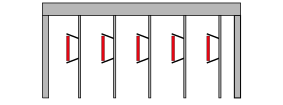
- The simplest method is to clamp components onto the outer edges (of the material thickness) or into drill holes (see sketch 7)
- A suspension system using aluminium screws in threaded holes is possible but involves additional work. With this method, liquid inclusions may form which could leak out (runner).
Sketch 6
Connecting profiles
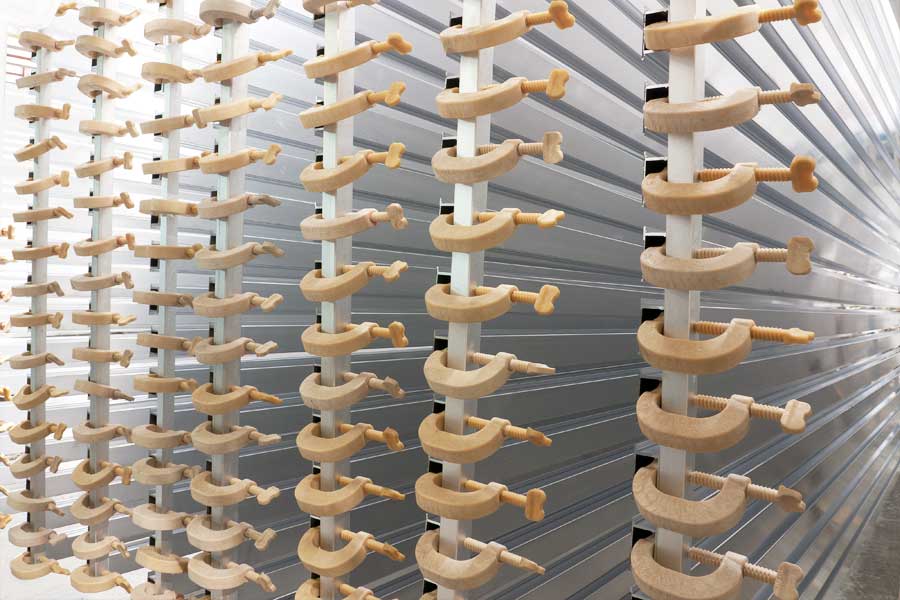
Profiles and sheets can be connected using clips, for example.
Connecting sheets
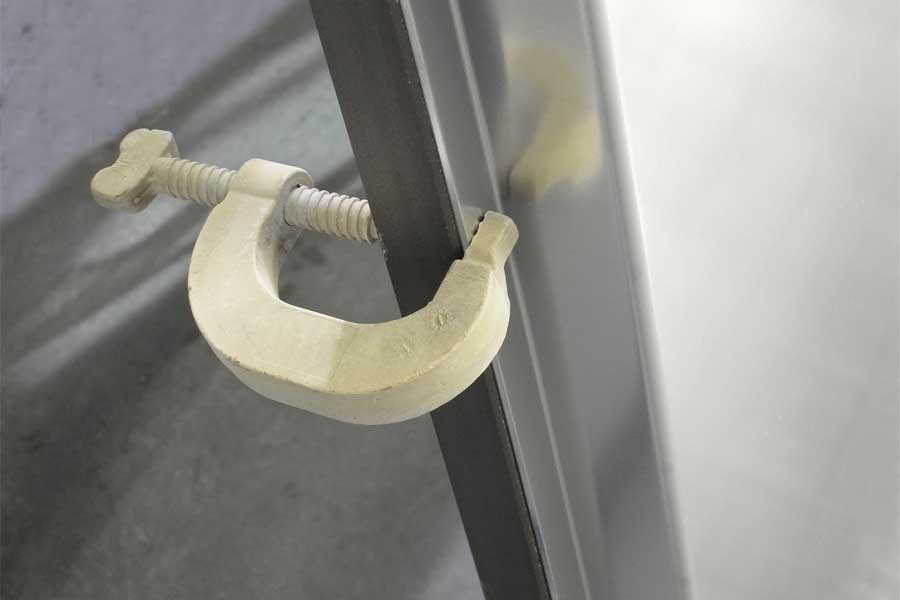
Small Parts Contact
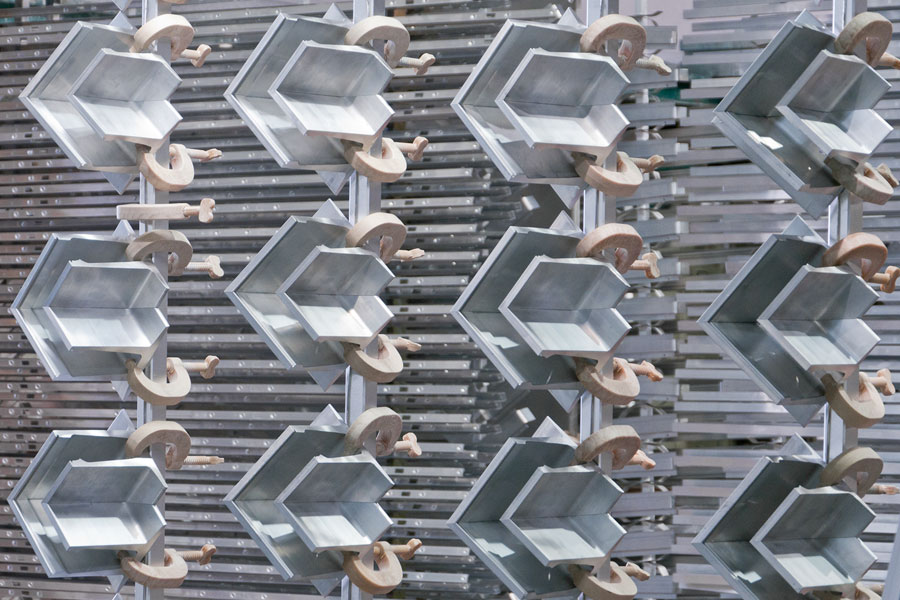
Internal contacts
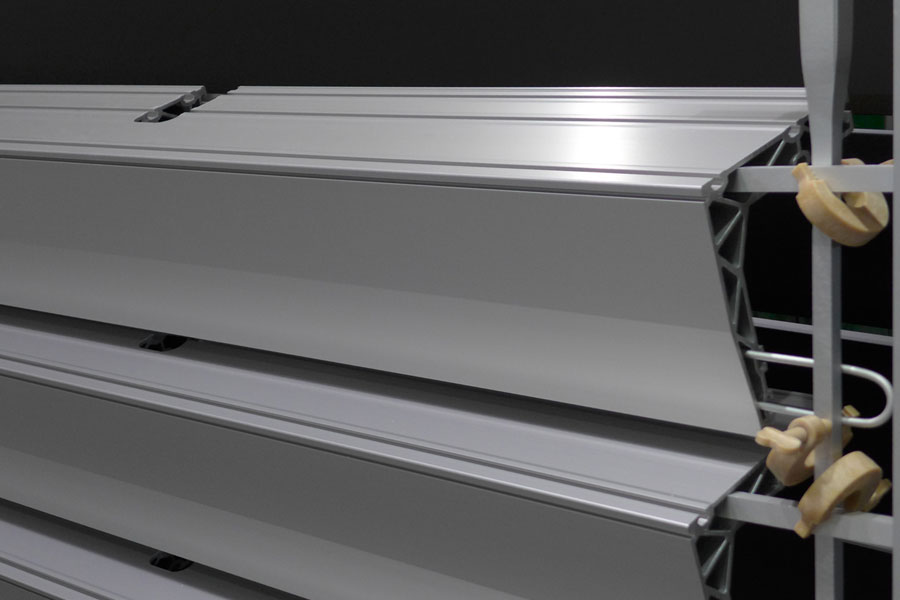
Why do these technical requirements exist?
During the surface finishing process, the aluminium parts pass through our production facilities, which include baths and chambers. The parts must be secured and require electrical contact. For this reason, the fixing points and contact points are, unfortunately, unavoidable. As the contact points are not finished, they remain visible and may cause aesthetic issues. If you are unsure or have any questions, we would therefore ask you to contact us in advance.
We'd be happy to advise you. - 06763 308-0
We'd be happy to look into how we can finish your aluminium product – please call us on 06763 308-0. On our website, you'll find detailed technical information on anodising and powder coating. Our project examples showcase reference projects and describe our „one-stop“ services.