

FAQ
What is...
Bonding, machining, two-stage process, GRANODAL® …? We'd like to explain some technical terms here and answer frequently asked questions. Do you still have any questions? We'd be happy to answer them and offer advice in person over the phone or by email – do give us a call!
ALANOX® →
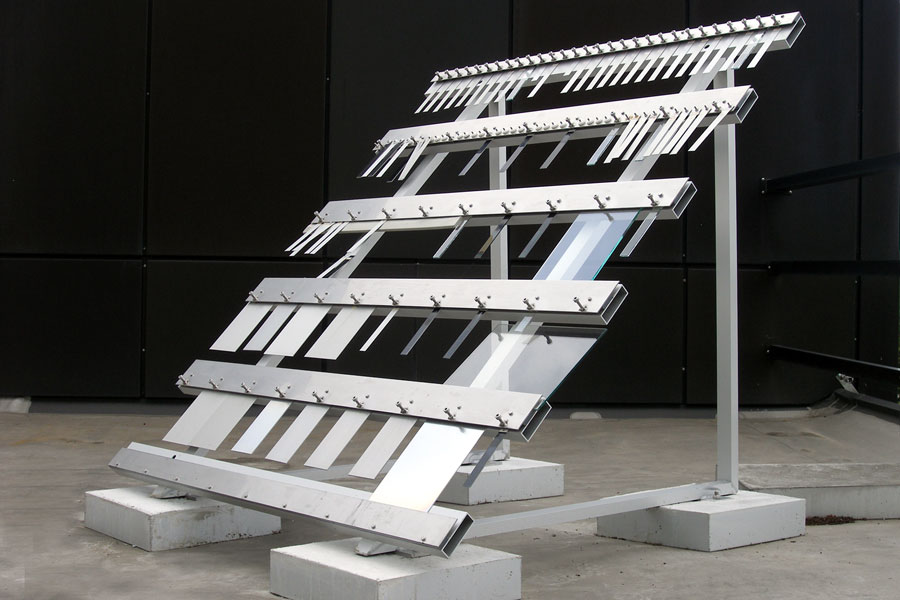
ALANOX® refers to aluminium with a stainless steel finish. It is based on the anodising process and a mechanical surface finish. ALANOX® is a trademark of ALUTECTA.
AluCenter →
Our AluCenter in Kirchberg offers customers the opportunity to purchase sheet metal, semi-finished products, window sills and fall protection systems directly during opening hours.
Anodisation →
Anodising is the international term for the anodic oxidation of aluminium. Anodising and „Eloxieren“ are two names for the same type of surface treatment.
ANOPRINT® →
ANOPRINT® is our process for manufacturing anodised aluminium plates for digital printing. ANOPRINT® is a trademark of ALUTECTA.
Aufhängung / Suspension →
The components must pass through baths and production lines for surface finishing. They are transported on rails to which the components are securely suspended. This method of fastening also serves to establish electrical contact. There are various methods of fastening. Depending on the component, clips, screws, clamps and so on are used. Special suspension frames are often designed for mass-produced items. We are happy to answer any questions you may have regarding suspension, fastening and electrical connection.
Bearbeitung / Machining →
In our aluminium machining department, we shape aluminium profiles and sheets. Using a wide range of machining processes – both manual and machine-based, guided by CAD and computer control – we manufacture aluminium components for all sectors.
brioxAL® →
brioxAL® are special high-gloss aluminium sheets that can be anodised by ALUTECTA using a certified process
CONTECTA →
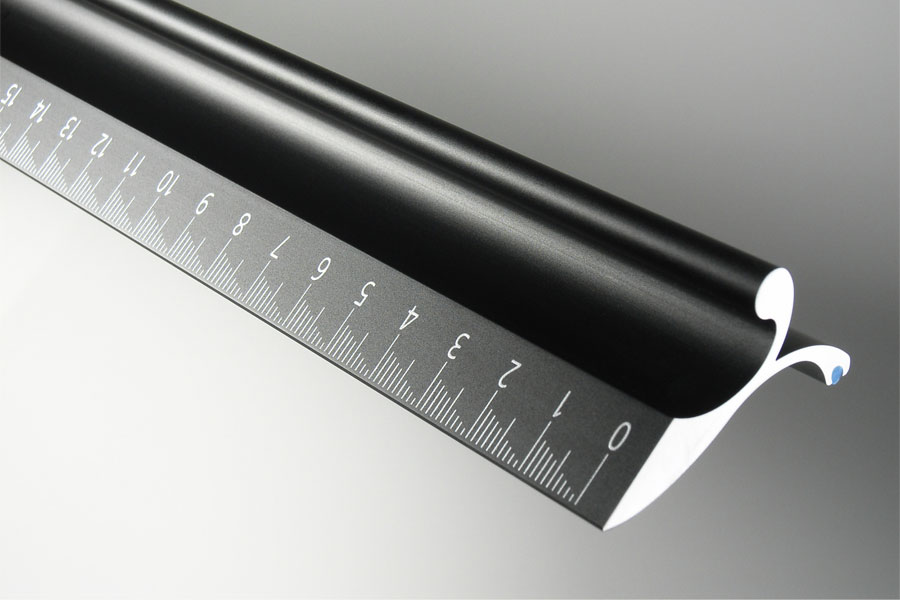
CONTECTA is a company specialising in the distribution of technical innovations, such as the DICONAL® PV mounting system, and aluminium design products, such as the dp7 aluminium ruler. The aluminium components are manufactured in close partnership with ALUTECTA.
DICONAL® →
The PV-Montagesystem DICONAL® is a brand of CONTECTA GmbH produced by ALUTECTA
DIN 17611 →
This DIN standard explains the various types of pre-treatment and anodised surfaces E0 bis E6
Eloxal / Anodising →
Eloxal stands for ELectrolytic OXidation of aluminium. Anodising is the process of converting the aluminium surface into a hard, dense oxide layer.
Eloxalpore / Anodised pore →
The anodising process creates capillary-like pores, known as anodised pores. These pores, which are still open, form the „base coat“ for the Color and SANDALOR® colouring processes.
Farbmuster / Colour samples →
We provide you with various colour samples.
- Website - The representations of the anodised colours and the RAL colour chart for powder coating are merely simulations and approximations; due to technical limitations, they cannot be considered colour-accurate.
- Reference samples - Anodised aluminium colour charts – the colour charts and samples we send out are for reference purposes only. They show a possible colour within the tolerance limits, which define a light-to-dark range for each colour code.
- Reference samples - define a light and a dark reference sample for each colour code. To ensure the highest possible colour accuracy for anodised surfaces, we recommend using reference samples made from the original material.
- Powder coating - although RAL colour charts on paper are produced at considerable expense, they do not provide a reliable match with the original aluminium surfaces, particularly in terms of gloss level, texture and metallic effects.
- We therefore also offer aluminium colour swatches / samples in their original finished form.
Anodised + powder coating. For sensitive, large-scale and complex projects, we would ask you to discuss with us, before placing your order, how we can help you find the ideal finish for your project.
GRANODAL® →
GRANODAL® is a brand name for grey anodised aluminium in various shades.
Grenzmuster / Reference samples →
See colour samples
Inneneloxal / Internal anodising →
Internal anodising refers to a uniform anodised layer on the inside of aluminium profiles. Special electrodes enable the controlled build-up of the anodised layer.
Kontaktierung / Contacting →
Contacting' refers to the process of establishing an electrical connection by securing the aluminium parts to the mounting frame. An electrical connection is technically necessary in order to carry out anodising or powder coating. The contact point is not anodised or coated and therefore remains visible. To avoid any visual impairment of the components, it is important to position the contact points away from the visible side. Correctly identifying and labelling the visible sides and contact points helps us to process your order as efficiently as possible. You will find guidance on making contact in our information sheet.
Konversionsschicht / Conversion layer →
Conversion layer is the technical term for the treatment of the aluminium surface to create a bonding layer between the aluminium and the powder coating. Alternatively, pre-anodising is also an option.
Lichtechtheit / Lightfast →
Lightfast colours retain their appearance when exposed to sunlight. The ISO Blue Scale indicates the level of lightfastness. For outdoor applications, such as in architecture, ALUTECTA uses only colours with a lightfastness rating above 8 on the ISO Blue Scale.
Originalmuster / Original sample →
See Colour samples
Oxidschicht / Oxide layer →
See Anodisation
Pulverbeschichtung / Powder coating →
In powder coating, coloured powder is sprayed onto electrically earthed parts using compressed air. In the curing oven, the particles are liquefied and fused together to form a continuous plastic coating.
Richtmuster / Guideline samples →
Siehe Farbmuster
SANDALOR® →
Das SANDALOR® Verfahren bietet lichtechte farbige Eloxaloberflächen in Gelb, Gold, Rot, Blau und Türkis.
Sichtseite / Visible side →
Sheets and profiles are suspended, secured and connected for surface finishing by anodising and powder coating. The visible side is the side or surface of a profile or sheet that remains visible in the application. To ensure that no contact points or marks from the suspension and securing are visible on the visible sides, we require details of which sides are visible.
Spanende Bearbeitung / Cutting process →
Machining is both a cutting process and an exciting one, involving the removal of material – for example, through milling. Our aluminium machining service offers machining of sheet metal and profiles.
Verdichtung / Sealing →
Sealing is the final step in the anodising process. The pores in the anodised surface are sealed in water heated to 100°C.
Voranodisation / Pre-anodising →
Pre-anodising is a specialised anodising process used to produce a bonding layer for powder coating. It is an alternative to a conversion coating.
Vorbehandlung-Eloxal / Pre-treatment-Anodising →
Pre-treatment removes contaminants such as grease and the natural oxide layer from the material. Pre-treatment E0–E6 in accordance with DIN 17611 also allows the reflective properties of anodised aluminium surfaces to be tailored.
Zweistufenverfahren und Färbung / Two-step process and colouring →
Two-step colouring refers to a combination of two colouring processes – step 1 produces the anodised layer, whilst step 2 determines the light-to-dark variation in colour. Combining this with the SANDALOR® process produces vibrant, lightfast, coloured anodised surfaces.